What Appliances Can a Solar Generator Actually Run?
A solar generator provides clean, portable electricity, but its ability to power household appliances is dependent on the generator's capacity and the wattage requirements of your equipment. Some solar generators only power tiny gadgets, but larger types may run refrigerators, microwaves, and even washing machines. Before relying on one during an outage or off-grid journey, you should understand what it can actually support. This article explains what products solar generators can genuinely power—from phones to air conditioners—and what factors impact performance. With this information, you can select the appropriate generator and utilize it efficiently without overloading or injuring your system.
What Small and Medium Appliances Can a Solar Generator Power?
Phones, Laptops, TVs, and Everyday Electronics
A mid-sized solar generator can readily power popular gadgets such as cellphones, tablets, laptops, and LED televisions. Phones consume around 5-15 watts, whereas laptops consume 50-100 watts. A 300-500Wh generator can charge phones many times or power a laptop for several hours. LED TVs consume 60-150 watts, providing several hours of watching on a full charge. These products require relatively little power and rarely create starting spikes, making them excellent for solar installations. Use USB-C and DC connectors wherever possible to save electricity. Solar generators are reliable for keeping communication and entertainment devices operating during distant business, camping, or power outages.
Kitchen Appliances Like Microwaves, Coffee Makers, and Blenders
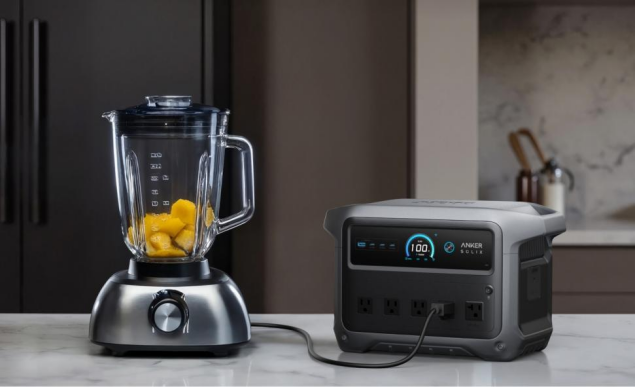
Many kitchen appliances consume a large amount of power, necessitating cautious generator sizing. Microwaves consume 600-1,200 watts, with starting surges pushing higher. A strong solar generator with at least 1,500W output may momentarily power a microwave. Coffee makers typically consume 800-1,000 watts and run for only a few minutes. Blenders need 300-600 watts, depending on the model and speed. A 1,000-2,000Wh generator can power this for short periods of time, but long-term use quickly drains the battery. Use just one kitchen appliance at a time. Examine the appliance's wattage and check that the generator's output can withstand the maximum load. Solar generators are efficient for supporting basic culinary operations on an irregular basis.
Fans, Space Heaters, and Small Climate Devices
Fans and mini air purifiers are low-wattage solutions that work well with solar generators. Desk or pedestal fans consume 30-80 watts and may operate for hours on a 500-1,000 Wh system. Small heaters, on the other hand, use 1,000-1,500 watts, making them difficult to power with anything less than the most powerful generator. Running a heater continually will quickly deplete the battery. If you want temporary heat, choose a ceramic space heater with an adjustable wattage. Humidifiers and air purifiers generally use 40-100 watts and are suitable for mid-sized units. While fans are effective at cooling, heating remains a difficult task for most solar generators unless usage is brief and battery capacity is high.
Can a Solar Generator Run Large or High-Power Appliances?
Refrigerators, Freezers, and Chest Coolers
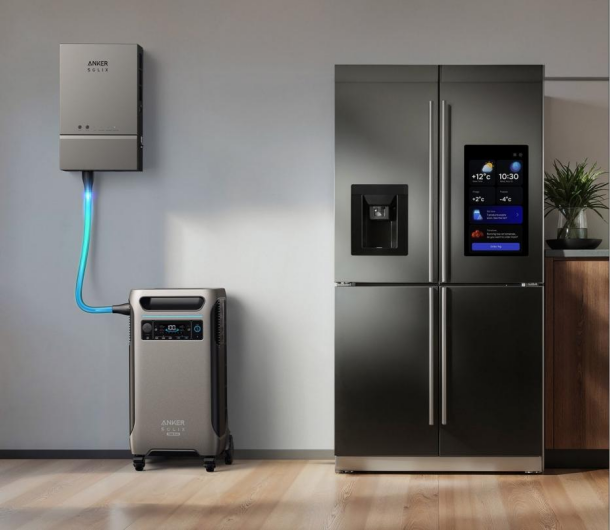
A solar power generator can power refrigerators and freezers if the system has enough surge and continuous output. An average refrigerator consumes 100-200 watts when in use, but can reach 1,200 watts when starting up. It is advised to use a generator with at least 1,000W continuous and 2,000W surge capacity. A 1,500-2,000Wh battery can power a refrigerator for 8-24 hours, depending on the compressor cycle. Chest coolers are more efficient, often requiring less than 70 watts, and are perfect for solar usage. To save energy, limit door openings and chill things before loading. A solar power generator, with a suitable size and energy management, can consistently meet refrigeration demands during outages or off-grid stays.
Washing Machines, Dishwashers, and Power Tools
Most washing machines and dishwashers require 1,000-1,500 watts, which may rise to 2,000 watts during motor cycles or heating. A solar generator must have enough surge capacity and continuous output to manage these demands. For example, a 2,000W output and a 2,000-3,000Wh battery may power a washer for one cycle. Dishwashers use extra power owing to internal water heating. Power tools such as circular saws, drills, and sanders need 500-1,500 watts, depending on the model. Generators can facilitate short-term tool usage, although they may need to be recharged in between activities. Heavy-duty labor or large appliances should only be powered by high-capacity generators designed for whole-home or workshop use.
Air Conditioners, Electric Ovens, and Water Heaters
Solar generators struggle to power appliances like air conditioners, cookers, and water heaters. Portable AC devices typically consume 800-1,500 watts, with bigger units topping 2,000 watts. Central air conditioning systems are seldom compatible. Electric ovens and water heaters consume 2,000-5,000 watts and have extended runtimes, quickly depleting battery reserves. Most solar generators, even those at the top end, cannot power these items for long without significant capacity and solar input. If cooling is required, try evaporative coolers or low-wattage window units. For heating, utilize gas or another off-grid option. Solar generators are best used for necessities rather than full-size climate control or kitchen equipment.
Conclusion
Depending on its size, output, and battery capacity, a solar generator may power a variety of products, including phones, laptop computers, refrigerators, and power tools. Small and medium-sized devices are simple to manage, but large appliances need careful design or high-capacity systems. Understanding your gadgets' wattage and the generator's limitations promotes safe and successful operation. A solar generator is a stable and clean source of electricity for short-term backup, camping, or emergencies. Simply be realistic about its capacity and manage loads carefully. With the proper configuration and expectations, solar power may be a smart, flexible option for both on- and off-grid demands.